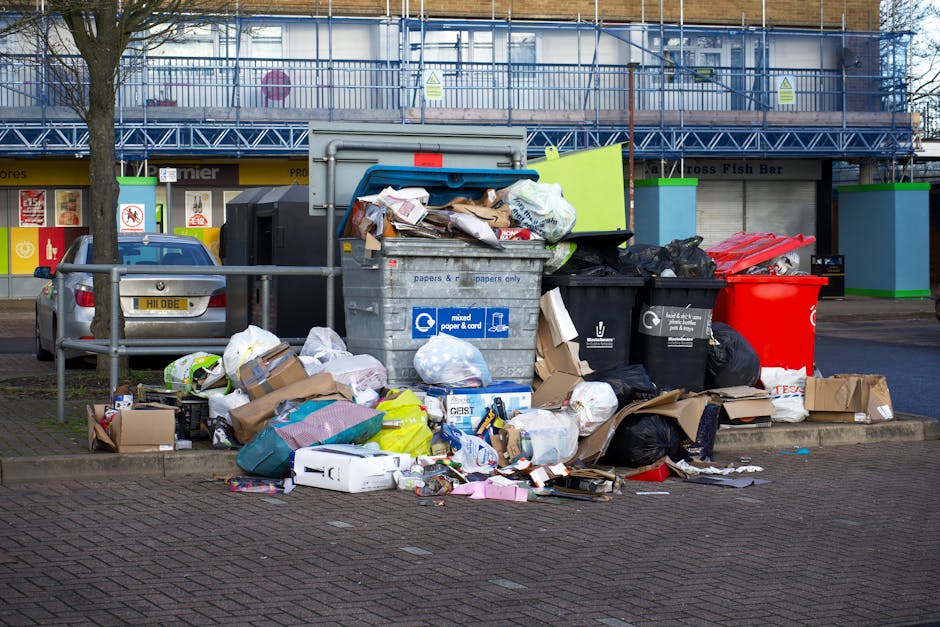
Rubbish clearance cost in Barking real cost and hidden fees
If you are trying to work out the Rubbish clearance cost in Barking real cost and hidden fees, you are not alone. Most people start with a simple question - "How much will this actually cost me?" - and then quickly discover the price can shift depending on what needs removing, how much there is, how easy it is to access, and whether anything awkward is hiding in the pile. That is where the surprises usually creep in.
In this guide, we break the cost down in plain English. You will see what tends to affect the bill, which fees are genuinely normal, which ones are often overlooked, and how to avoid paying more than you should. We will also look at practical options such as professional rubbish removal, skip hire, wait and load skip hire, and grab hire services, because the cheapest quote on paper is not always the cheapest real-world solution. Truth be told, that is where people get caught out most often.
One quick note: Barking has the same general waste rules as the rest of London, but local access, parking, and permit issues can make a difference to the final price. So if your driveway is tight, your street is busy, or the waste includes bulky items like a sofa or fridge, it pays to know what you are signing up for before the collection van turns up.
Table of Contents
- Why rubbish clearance cost in Barking matters
- How the pricing usually works
- Key benefits and practical advantages
- Who this is for and when it makes sense
- Step-by-step guidance
- Expert tips for better results
- Common mistakes to avoid
- Tools, resources and recommendations
- Law, compliance, standards or best practice
- Options, methods, or comparison table
- Case study or real-world example
- Practical checklist
- Conclusion
- Frequently asked questions
Why Rubbish clearance cost in Barking real cost and hidden fees Matters
Waste removal looks straightforward until you start comparing quotes. One company says one price, another gives a "from" figure, and a third sounds cheap until the small print adds waiting time, stair carries, congestion-related delays, or extra disposal charges. That is why understanding the real cost matters. It helps you choose the right service, not just the lowest headline figure.
In our experience, the biggest frustration is not always the money itself. It is the feeling that the job was priced one way and billed another. Let's face it, nobody likes standing on the pavement with a pile of old cupboards while the driver checks the note and says, "Oh, that'll be extra."
For Barking residents and businesses, the real cost often reflects a mix of practical issues: limited access, communal flats, timed loading restrictions, mixed waste, or disposal of heavier materials. If you are clearing a house, a garage, a garden, or a commercial unit, the pricing model needs to match the job. Otherwise, you can end up paying for space you do not use or service you do not need.
This is also where the right service matters. A straightforward domestic load may suit domestic skip hire, while a fast commercial clearance might be better handled through commercial skip hire or office clearance. Choosing well can save real money and a fair bit of stress too.
How Rubbish clearance cost in Barking real cost and hidden fees Works
Most rubbish clearance pricing in Barking follows one of three models:
- Fixed-load pricing - you pay for an estimated volume or van load size.
- Item-based pricing - you pay per bulky item, such as a mattress, fridge, or sofa.
- Time-and-access pricing - used when the job is complex, the loading is slow, or the team has to wait around.
The first thing to understand is that waste is rarely priced by weight alone in everyday residential jobs. It is usually volume, labour, type of waste, and access. A half-full van of light bagged waste is very different from a half-full van of broken tiles, soil, and plasterboard. Same space, very different disposal costs.
There are also service differences. For example, man and van clearance is usually flexible and good for quick collection jobs, while a skip gives you time to load at your own pace. If you need access to a loading area and want someone to do everything in one visit, wait and load skip hire can be useful. If the waste is spread across a site or garden, grab lorry hire may be more practical.
The hidden fee problem usually appears when the quote assumes certain conditions that are not written down clearly. Common examples include:
- extra charge for carrying waste downstairs
- additional cost for heavy loads
- fees for mattresses, fridges, TVs, tyres, or rubble
- parking or permit-related charges
- cancellation or failed-access charges
- minimum-load charges if you have less waste than expected
In other words, the "real cost" is the base price plus the actual conditions on the day. If the service is honest, those conditions are explained up front. If not, the bill can be a bit of a jump scare.
Key Benefits and Practical Advantages
Paying for proper rubbish clearance is not just about getting rid of clutter. Done well, it solves a practical problem quickly and safely.
First, it saves time. Sorting, loading, transporting, and disposing of waste yourself can take an entire weekend, sometimes more. If you are dealing with a clear-out after decorating, moving, or a tenancy change, the value of getting it done in one go is obvious.
Second, it reduces hassle. You do not need to hire a van, arrange disposal trips, or guess what can go where. A good provider should make the process feel simple from first quote to final sweep-up. If the waste includes furniture or appliances, specialist services such as mattress and sofa disposal and fridge and appliance removal can be far more convenient than trying to shift them yourself.
Third, it can improve compliance. Waste must be handled properly, especially if there is mixed construction debris, confidential material, or anything classed as hazardous. For paper records, confidential shredding is a safer route than stuffing everything into a general load. For risky materials, hazardous waste disposal matters even more.
Fourth, the right option can be cheaper than you think. For a small and tidy clearance, a van-based pickup may be more cost-effective. For larger, awkward, or heavier waste, a skip or grab service may work out better. The trick is matching the method to the job, rather than assuming one option is always best.
Expert summary: The cheapest rubbish clearance quote is only useful if it includes the real conditions of your job. Access, waste type, loading time, and disposal category matter just as much as the headline price.
Who This Is For and When It Makes Sense
This topic is relevant to far more people than you might think. If you are in Barking and you have waste that is too much for the bins, too bulky for a car, or too awkward to leave lying around, then it makes sense to look at proper clearance pricing.
- Homeowners clearing lofts, garages, gardens, or spare rooms
- Tenants needing to leave a property clean and on time
- Landlords dealing with end-of-tenancy rubbish
- Builders and trades producing rubble, timber, plasterboard, and packaging
- Offices replacing furniture, shredding documents, or clearing storage
- House clearance customers managing a bereavement, downsizing, or a long-overdue declutter
For domestic jobs, house clearance or garage and loft clearance may fit better than trying to piece together a few separate collection runs. For outdoor waste, garden waste removal can be the simplest route, especially if the pile includes branches, soil, turf, or old fencing.
If the job is commercial or site-based, you may need a broader service such as site clearance, construction waste disposal, or builders waste removal. These are often priced differently because the materials are heavier and the safety requirements are tighter. Not glamorous, but very real.
Step-by-Step Guidance
If you want a sensible price and fewer surprises, work through the job properly before you book. Here is a practical way to do it.
- List what needs removing. Be specific. A "few bits of rubbish" is not enough detail. Say whether it is furniture, bags, garden waste, rubble, appliances, or mixed waste.
- Estimate how much space it will take. A small pile in the corner can look harmless, then suddenly fill a van. If you are unsure, compare it with the guidance on skip sizes and prices.
- Check access. Can a van park close by? Are there stairs? Is there a lift? Can a skip be placed legally and safely? If not, you may need skip hire permits or an alternative method.
- Identify awkward items. Fridges, mattresses, paint, chemicals, plasterboard, and electronics can change the price. Some items need special handling.
- Ask what is included. Get clarity on labour, loading, disposal, VAT, congestion or parking risk, and any minimum charge.
- Compare the total, not the teaser rate. The real number is what matters. A low "from" price is not the same as a proper quote.
- Book the method that matches the job. For fast same-day problems, same day skip hire can be useful. For quicker offloading in one visit, a grab lorry may be the better fit.
A small but useful habit: take a few photos before you call. Side angle, wide angle, and a close-up of the trickier bits. It sounds obvious, but it saves a lot of back-and-forth later.
Expert Tips for Better Results
Here is where people usually save the most money - by making the job cleaner, simpler, and easier to quote accurately.
- Separate waste types before collection. Mixed loads are usually more expensive than sorted loads. Keep rubble apart from timber, and furniture apart from garden waste if you can.
- Flatten bulky items. Broken-down furniture takes less space. A flat wardrobe is easier to price than one left whole.
- Move waste to an accessible spot. If the crew can load quickly from the front drive or garden gate, the job often goes smoother.
- Tell the truth about heavy materials. It is tempting to say "just light stuff," but if there are bricks under the cardboard, the quote will be off.
- Use the right service for the setting. Office, trade, and secure waste should not be treated like a standard household tip run.
- Read the terms before booking. The important bits are not exciting, admittedly, but they are where many fee disputes start.
If security matters, especially for business paperwork, look at payment and security and consider whether the job needs confidential shredding. For mixed operations and repeat waste, waste recycling services are worth asking about too.
One more thing. If a quote sounds unusually low, ask yourself: what have they not counted yet? That question alone can save you a proper headache.
Common Mistakes to Avoid
Most hidden fees are avoidable if you dodge a few common traps.
- Accepting a vague quote. "Around GBPX" is not enough if the job is complicated.
- Forgetting about access costs. Tight streets, shared entrances, and upper-floor flats can all affect the final number.
- Mixing restricted items into standard waste. One fridge or a load of plasterboard can alter the disposal method.
- Ignoring permits. If a skip needs road placement, you may need permission. Leaving this until the last minute can add delay and cost.
- Overfilling a skip. This is a classic. Once waste rises above the rim, you risk extra charges or refusal to collect.
- Assuming every provider prices the same way. They do not. One may include labour, another may not.
People also underestimate how long a clear-out takes. A Saturday morning job turns into a whole-day mission because every drawer contains something odd, like old cables, broken chargers, and one mysterious shoe. Happens all the time.
Tools, Resources and Recommendations
You do not need special tools to organise rubbish clearance, but a few simple resources help a lot.
- Phone photos of the waste and access points
- Basic measurements for the area or pile
- A list of item types so nothing gets missed
- Notes on parking or access restrictions
- Any tenancy, landlord, or site deadlines
If you want to explore service types before booking, it helps to compare skip hire, man and van, and grab lorry hire. They suit different situations. A skip gives flexibility, a van can be quicker for small to medium clearances, and grab hire is often useful for heavier or bulkier loads where you want fast removal.
You can also look at enclosed and lockable skip hire if you are worried about fly-tipping or want to keep contents more secure. For jobs that need a very quick turnaround, same day skip hire can be a practical fallback when time is tight.
Law, Compliance, Standards, or Best Practice
Waste clearance in the UK is not just a logistical job; it carries legal and environmental responsibilities. Without getting overly technical, the key point is simple: waste must be handled responsibly, transported by suitable operators, and disposed of properly. You should never be left guessing where your rubbish ended up.
For homeowners, the main practical responsibility is choosing a provider that follows sensible waste-handling practices. For businesses, the expectations are stricter, especially if records, packaging, construction debris, or trade waste are involved. If you are clearing a workplace, services like office clearance and commercial skip hire are usually better suited than a general ad-hoc pickup.
There is also a safety angle. Heavy lifting, sharp edges, broken glass, chemicals, and unstable piles can all cause problems. That is why providers should have clear procedures and sensible insurance arrangements. If you are comparing companies, it is worth checking pages such as health and safety policy, insurance and safety, and recycling and sustainability to understand how they work. No need to get lawyerly about it, but a little due diligence goes a long way.
Best practice also means honesty about waste type. If something may be hazardous, do not hide it in the load. If the material includes confidential paperwork, do not just bin it with general waste. The right process is usually the safest and the least awkward in the end.
Options, Methods, or Comparison Table
Choosing the right clearance method is often the difference between a fair price and a frustrating one. Here is a simple comparison.
| Method | Best for | Typical strengths | Possible drawbacks |
|---|---|---|---|
| Rubbish removal | General household or mixed clearances | Simple, quick, labour included | Can cost more per load if the job is large |
| Skip hire | Ongoing DIY, renovation, or gradual loading | Flexible loading over time | May need space and permits |
| Wait and load | Fast clearance where parking is possible | No long hire period, efficient | You need to be ready when the team arrives |
| Grab hire | Heavy, bulky, or loose waste | Handles larger volumes well | Access and positioning still matter |
| Man and van | Smaller loads and quick removals | Flexible and often convenient | May not suit very large or heavy projects |
If you are not sure which route fits, the best clue is the waste itself. Light and sorted? A van may do it. Heavy rubble? Think skip or grab. Need to load at your pace? Skip. Need it gone today and you can work quickly? Wait and load. Simple, really - though the details still matter.
Case Study or Real-World Example
Imagine a Barking homeowner clearing a two-bedroom flat after a long overdue declutter. There are three old wardrobes, several bags of mixed rubbish, a broken microwave, and a mattress. At first glance it feels like "just a few bits." Then the hallway fills up, the lift is small, and the parking outside is busier than expected on a weekday morning.
If they booked on a vague "small load" price, the provider might arrive and discover the job needs more labour than expected. The mattress, appliance, and bulky furniture also affect disposal. Suddenly the cheap quote is no longer cheap.
A better approach would be to send photos, mention the exact items, and ask for a quote that includes labour and the bulky-item handling upfront. In that scenario, a rubbish removal service or a carefully sized skip might be the most sensible choice. If the flat clearance includes loft storage or extra household clutter, garage and loft clearance can be relevant too.
That kind of job is common. Nothing dramatic. Just one of those clear-outs that quietly grows legs and becomes a bigger day than expected. Planning properly avoids the awkward middle moment where everyone is standing around saying, "Right, where do we start?"
Practical Checklist
Use this before you book anything.
- Have I listed every item or waste type?
- Do I know whether the waste is mixed, bulky, heavy, or hazardous?
- Have I checked access, stairs, parking, and loading space?
- Do I need a permit for a skip or street placement?
- Have I asked what the quote includes and excludes?
- Do I understand the minimum charge or load size?
- Have I asked about extra fees for appliances, mattresses, rubble, or special items?
- Do I need same-day removal or a timed collection window?
- Would a skip, van, grab lorry, or wait-and-load be the best fit?
- Have I checked how the provider handles recycling and safety?
If you can answer those points before you book, you are already ahead of most people. And honestly, that is where the savings often come from.
Get a free quote today and see how much you can save.
Conclusion
The true rubbish clearance cost in Barking is rarely just the headline price. It is the base rate, plus access, labour, disposal type, and any awkward bits that show up on the day. Once you understand that, the market becomes much easier to read. You stop comparing vague numbers and start comparing real value.
If you are clearing a home, a garden, a flat, or a worksite, the smartest move is to match the service to the job, describe the waste honestly, and ask a few direct questions before booking. That alone can strip out many hidden fees and save you from avoidable stress. Not bad for a little prep, really.
When the job is planned properly, rubbish clearance feels less like a hassle and more like a reset. A cleaner space, a clearer head. Sometimes that is worth more than the quote itself.
Frequently Asked Questions
How much does rubbish clearance usually cost in Barking?
The cost depends on the amount of waste, the type of material, access, and whether labour is included. A small straightforward job will usually cost less than a bulky or mixed clearance, but the real figure should always be confirmed with a proper quote.
What hidden fees should I watch for?
Common hidden fees include charges for stairs, long carries, heavy waste, mattresses, fridges, permits, waiting time, or failed access. Always ask what is included before you book.
Is rubbish removal cheaper than skip hire?
It depends on the job. For a small load or a fast one-off clearance, rubbish removal can be better value. For DIY or projects where you need time to fill the waste gradually, skip hire may work out more cost-effective.
Do I need a permit for a skip in Barking?
If the skip needs to go on a public road, a permit may be required. If it can stay entirely on private land, you may not need one. It is worth checking before booking so there are no delays or extra costs.
Why is my quote higher than expected?
Prices often rise because of access issues, mixed waste, heavy materials, special disposal needs, or labour that takes longer than planned. A clear description of the waste usually prevents this.
Can I put a mattress or fridge in a rubbish clearance load?
Often yes, but these items are usually treated as specialist waste and may attract extra charges. Mention them early so the provider can price the job correctly.
What is the cheapest way to clear rubbish in Barking?
The cheapest option depends on volume and access. Small loads may suit man and van clearance, while larger or ongoing jobs may be cheaper with a skip or grab hire. The best option is the one that fits the actual waste, not just the one with the lowest headline price.
How can I avoid surprise charges?
Give a full list of waste, share photos if possible, ask what is included, and check whether there are extra fees for heavy items, stairs, or access problems. Clear information up front is the best protection.
Is same-day rubbish clearance more expensive?
It can be, because urgent collection usually needs quicker scheduling and tighter logistics. That said, if time matters, the convenience may be worth the extra cost. See same day skip hire if speed is the priority.
What happens to the rubbish after collection?
It should be sorted, transported, and processed for disposal or recycling according to the waste type. A good provider should follow responsible handling practices and aim to recycle wherever possible.
Can I mix garden waste with household rubbish?
You can sometimes do this, but mixed waste is often priced differently and can be less efficient to dispose of. If possible, separate garden waste so the quote is more accurate and the disposal route is simpler.
When should I choose grab hire instead of a skip?
Grab hire is often useful for heavy, loose, or bulky waste that is awkward to load by hand. If you have a lot of soil, rubble, or mixed site waste, it can be a very practical choice.